

We have a clear opportunity in front of us. Unsubscribe. Opt-out. Non Participation.
Something has shifted in the last few weeks for me, but also for many people I’m talking with. I’m hearing more and more people asking how to respond to the… well… (gestures broadly) state of the world. It’s easy to feel hopeless when the systems and social contracts that once supported democratic participation and collective meaning-making feel compromised.
People are doing what they can. Some are protesting in the streets. Some are calling their representatives and rallying for voting and civic engagement, hoping traditional methods will still be effective. That’s a long game. Many are speaking out on social media, using their platforms to raise awareness. That’s a nearer-term game. But is it an effective one?
There’s a familiar tension here. There’s that well-worn line from Audre Lorde: “The master’s tools will never dismantle the master’s house.” I keep coming back to that. I find myself wondering whether posting online becomes another way of feeding the same systems that shape and influence us. Surely the system has been designed to absorb a lot of that energy. And still, these are among the tools we have for reaching people. Often in the DMs, not the feed. The feed wants presence, attention, rage… cats. Those are the fuels that keep algorithms running. That and our purchasing power.
A hot flame of rage-posting doesn’t last long enough for political will to translate into durable change. It burns people out. It helps target more ads at us. Rage has its place. The question is where that energy can be directed so it actually sustains something meaningful. For me, this feels like an invitation to think differently.
“So you’re an anti-corporate?” No. I’m more interested in rebellion against the systems and patterns that keep us overwhelmed and distracted. Not all corporations are created equal. They are just another one of the master’s tools. The feeds, apps, and media are others that fracture attention, along with older narratives we’ve absorbed that quietly do the same. For example: the propaganda of the dutiful worker, the high performer who earns safety by over-functioning, the relentless optimist who spiritually bypasses themselves to ignore the cost of living inside extractive systems.
These identities keep people exhausted, numbed out, and too depleted to meaningfully push back. Sometimes my work with clients leads to them leaving corporate. In fact it’s what my own work led me to, but it’s not a given, and it’s not always the right time. Not everyone can unplug themselves yet from the Matrix. The shock would be too devastating. There is room for that nuance too.
In my private coaching work, and with members of the Rebellion Collective, the focus has been on a quieter form of rebellion. Reclaiming capacity. Tending to nervous systems. Building resilience through connection, skill-sharing, and belonging. Cultivating connection with ourselves, each other, and the natural world. This practice has been part of my life for a long time. It sits within a lineage of nonviolent resistance grounded in refusal and non‑participation. A slower form of activism rooted in care and resourcing ourselves for the long struggle ahead. The struggle for our sovereignty.
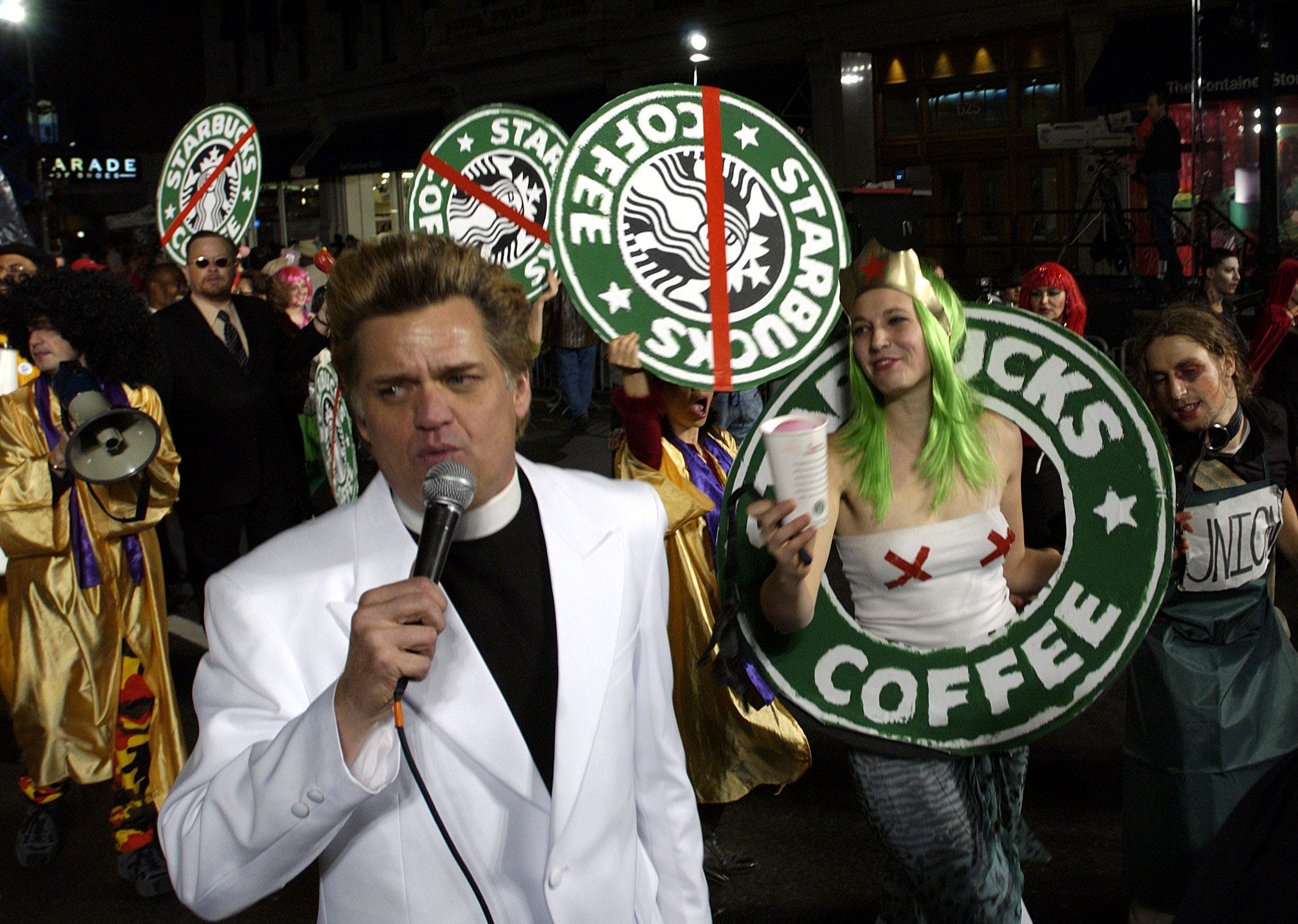
I’m reminded of Reverend Billy and the Church of Stop Shopping in New York. Rather than lobbying Congress or drafting policy papers, they staged ritualized refusal inside the temples of consumption. At the very ground zero of our addiction. Big‑box stores. Banks. Disney. Starbucks. “Shopocalypse” named consumerism directly. It named how shopping had become a coping mechanism, a spiritual substitute, and a stand‑in for true belonging. We are team Apple or Android instead of team human.
What stayed with me was more than the satire, the situationist performance, and the spectacle. It was also the insistence that not buying could be a meaningful act, that non‑participation itself could disrupt the cultural trance.
I think about Dorothy Day and the Catholic Worker movement. Voluntary simplicity. Mutual aid. Choosing sufficiency over excess as resistance to an economy organized around extraction. A parallel way of living grounded in sufficiency and mutual care, quietly refusing the logic of accumulation.
And yes, In the least cliche way possible, I think about Gandhi and non‑cooperation. Refusing British cloth. Spinning homespun. Withdrawing legitimacy and labor from an empire that depended on participation. The power lived in refusal, sustained over time, until the system could no longer pretend consent still existed.
Theorists have named that we live in a late-stage capitalist system. We also live inside a techno‑feudal landscape. Most of us still have to work. The digital panopticon has been with us for a while now, and like good little serfs, we either play our part or choose not to participate.
We still have agency over how we spend our time, where we direct resources, and what signals we send to those who benefit from the status quo, staying as it is. Those choices matter more than follower count. This too is a quiet rebellion.
Lately, it’s felt like a collective tightening of resources across the board. An energetic recession and energetic inflation mirroring the unspoken economic ones many people are experiencing. A sense that familiar responses and resources no longer work the way they once did. The Matrix adapted to our resistance, culturally speaking. Another approach is required.
In a recent Pivot episode, Kara Swisher and Scott Galloway described “Resist and Unsubscribe” as a month-long pullback from Big Tech, grounded in a simple premise: sustained changes in consumer behavior tend to register with power more reliably than protest alone.
I’m participating. Opting out may be the better way of naming it.
This doesn’t feel like a departure for me. This has been a long-running project. A slow, deliberate reclaiming of my time, energy, attention and financial resources. A steady reduction of my digital footprint and reliance on feeds, subscriptions, and algorithms telling me how to spend my capacity. It touches the media I consume, the data I generate, what I buy and from whom, the services I pay for, and even how and what I eat.
Over the past few years in particular, I’ve been steadily backing away from platforms and services that ask more than they return. I deleted my Facebook, Instagram, and Threads accounts. I left WhatsApp and moved to Signal. I canceled Audible and went back to a library card. Impulse buying fell and consumerism fell away long before I was laid off. Long before the pandemic. Those moments forced a reevaluation, but the shift began earlier, shaped by years of living in poverty and being acutely aware of what scarcity actually feels like. So I’ve made choices. I live in a modest home. Drive older cars that have been paid off. Cook at home. Fix, repair, reuse.
Shopping has narrowed to necessities and experiences. When I do buy something, I try to keep it local and small business whenever possible. It’s intentional, sometimes almost to a fault. It took me ten years to let myself buy a motorcycle again (turns out it was a critical piece of my mental health care). Longer yet to get a deeply meaningful tattoo that I wanted to celebrate a long journey of self care and recovery. Those are longer stories for another time.
This month continues that trajectory.
Amazon Prime is on its way out. Remaining mail‑order subscriptions are being cut back. Paid LLM tools are being canceled. My personal email continues its slow migration from Gmail to Proton. My Google Fi cell service is next. Perhaps as a jump to Cape. Loosening another tie to the Google ecosystem.
This feels practical, but not always easy. But these are places where agency is real. Reducing dependence on debt, impulse consumption, vulture capitalism, attention and attachment economy and the awareness of digital surveillance is part of it too. So is discovering another vector of civic participation. So is tending to body, heart, and mind. It’s a quieter rebellion, deeply personal, customized and intentional.
Yet I still run an online, service based business, and for now, constraints are part of that reality. Tools like Zoom, Google Workspace, Squarespace, and HoneyBook remain in place. So does Linkedin and Substack. Migrating away from them takes time, and doing it carelessly would limit my effectiveness over the long haul. But even with those systems i’m being intentional, tactical and structured.
My retirement savings also partially remain invested in the market. Long‑term stability still matters. I’m aware of the privilege that came with working in Big Tech and earning an income that once far exceeded anything I’d known before, allowing me to invest in the future. Those resources are now also helping me build my own thing, and it reminds me that money alone doesn’t create resilience. When I was earning the most I ever had, I was also the least healthy, the most anxious, and the most disconnected from my own life. It nearly broke me. I learned from that experience, but there was a real cost.
You may not have the same flexibility or margins that I do. You may be more dependent on these systems for now. That’s not a personal failing, that’s just facts. Non-participation is shaped by individual circumstance. I’ve made choices that allow me to say a firm no to corporate work, and one’s that have allowed me to say no to what many of us take for granted as being a given. We must participate, or fall behind. Or lose contact. But who and what are we really losing contact with? Who benefits from things staying the way they are?
You may still need to navigate this terrain for a while longer. This is a reality I support my clients in meeting with honesty, care and awareness.
People still need to work, eat, and live. Small businesses still need thrive. Maybe this is a chance for them to thrive even more. What’s being adjusted is participation in the most extractive systems, in places where choice exists and where individual decisions can create real impact.
There’s another layer here that matters to me.
The systems of the status quo don’t only extract money. They extract attention, capacity, critical thinking and creativity.
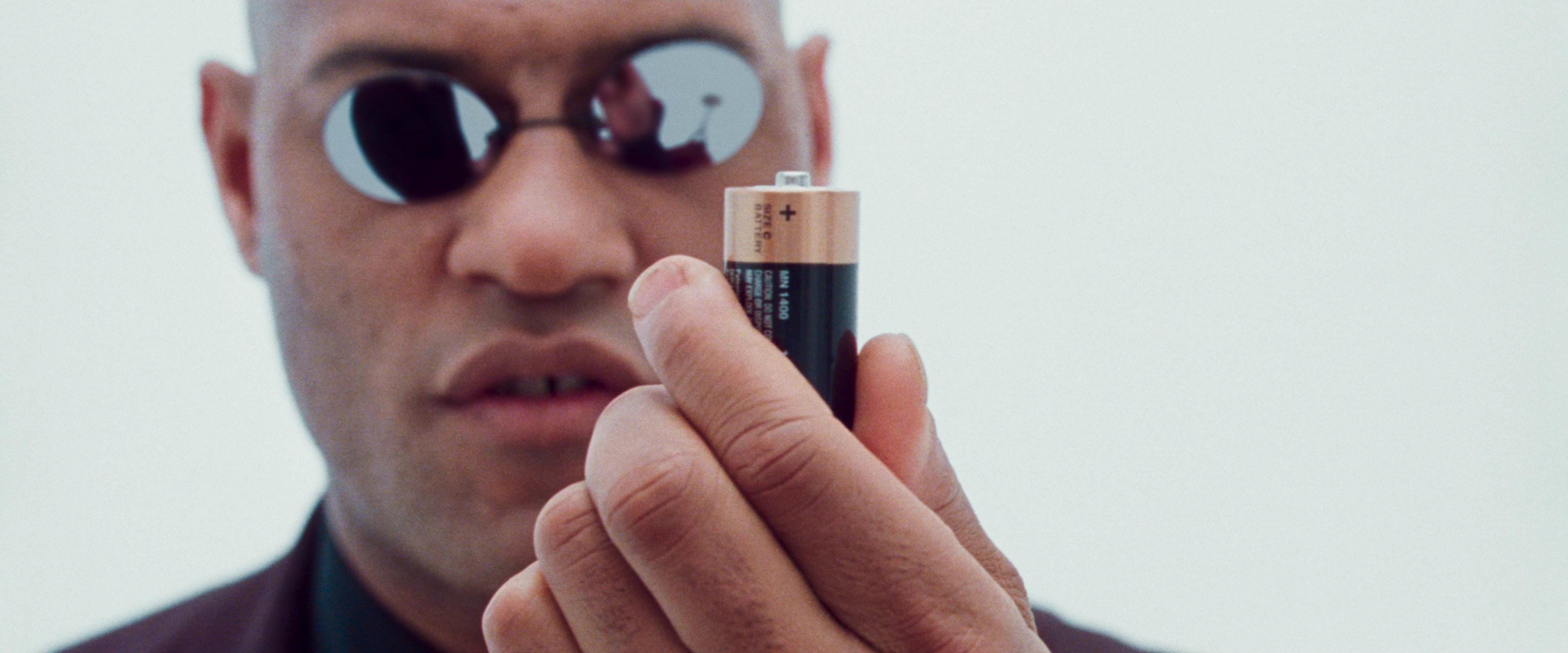
I recently came across a meme (if you know the one I’m talking about comment it below) that named this clearly. The Matrix may not have literally use humans as batteries, that was just fiction. But algorithms do something close. They harvest attention and energy to feed advertising models and maximize shareholder value. AI isn’t coming for your job, it’s coming for your humanity.
No wonder so many people feel overwhelmed.
But choice still exists. We still have agency. Unlike Neo in the Matrix, we aren’t just a ghost in the machine. We have the ability to change the outcome, by changing the inputs.
For the next month, I’m spending less, subscribing less, and participating more deliberately. I’m focusing on community building and mutual aid. As an economic signal to those in power, and as a way of staying sovereign. I say opt out.
A month of buying less, subscribing less, and scrolling less creates space to notice how much of our exhaustion is structural and not personal. Call it a digital sabbath. Call it a protest. Call it a Quiet Rebellion. Whatever you call it, give it a try and let the friction of that point you towards the areas in your life that most need your attention.
I’ll be writing about what I notice along the way. If you’re doing something similar, I’d love to hear how you’re reclaiming what’s yours. If you want to do this in community, you’re welcome to join us in the Rebellion Collective.
We’re building something new there. A commitment to something more human.
In the meantime,
Be Rebellious.
In Solidarity ✊
Nicholas Whitaker
Capacity Coach & Chief Rebellion Officer
Thank you for capturing the current opportunity so eloquently. With solidarity, this former Amazonian is canceling her Prime subscription.
I love this. As someone who has been pretty anti establishment for a long time, I remember initially learning about all the ways we bleed money and energy into systems that trap us - car payments, subscriptions, etc etc. And I’ve heavily identified with and participated in the DIY movement as a partial response, doing lots of growing my own food etc. For this current moment, I wish everyone would cancel their Prime memberships at the very least! Thriftbooks is so much better for books anyway (books are one of the main things I buy impulsively). Etsy is also amazing for supporting smaller creators for things we might need to order online.